Tester

WordPress vs Wix vs Squarespace: What's the Difference?

If you’re looking to get a new website built, you’ve probably come across all three. Wix and Squarespace advertise heavily, they look easy, and they’re cheap to get started with. WordPress is what most professional web developers use. So which one’s actually right for your business?

Here’s my honest take — having built sites on all of them over the years.

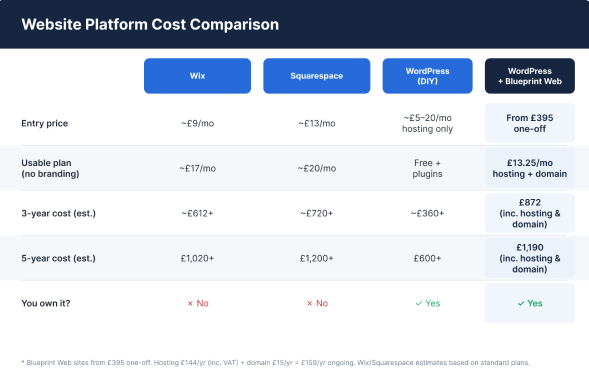
Wix Wordpress and Square space comparison table

What does each platform actually cost?

This is where things get interesting — because the headline price isn’t always the full picture.

Wix starts from around £9/month on a basic plan, but you’ll need at least the Core plan (around £17/month) to remove Wix branding and connect your own domain. Add an app or two from their marketplace and that monthly bill creeps up fast.

Squarespace starts from around £13/month, rising to £20/month for the Business plan if you want things like promotional pop-ups or advanced analytics. E-commerce plans push it higher still.

WordPress itself is free — but you’ll need to pay for hosting (typically £5–£20/month for a decent UK host We charges around £14.40 a month), a domain, and any premium plugins you need. If you’re having a site professionally built, there’s the upfront development cost too. At Blueprint Web, our sites start from £395 for a brochure site — and unlike a monthly subscription, that’s a one-off investment in something you actually own and uses minimal Plugins.

On the surface, Wix and Squarespace look cheaper. Over three to five years though, the monthly fees add up — and you still don’t own anything at the end of it.
Wix and Squarespace are built for simplicity — and that's both the appeal and the limitation

Website builders like Wix and Squarespace are designed so that anyone can put a site together without touching any code. You pick a template, drag things around, fill in your content, and you’re live. For a very simple site — a personal portfolio, a one-page business card — that can work fine.

The problem comes when your business grows and your website needs to grow with it. Want to add a booking system that works exactly how your business works? A custom product filter? A members area? An integrated CRM? With Wix or Squarespace, you’re working within the limits of what the platform allows. And those limits can feel very tight, very quickly.

There’s also the ownership question. Your Wix or Squarespace site lives on their platform. If they change their pricing, discontinue a feature, or shut down — you don’t have a lot of options.

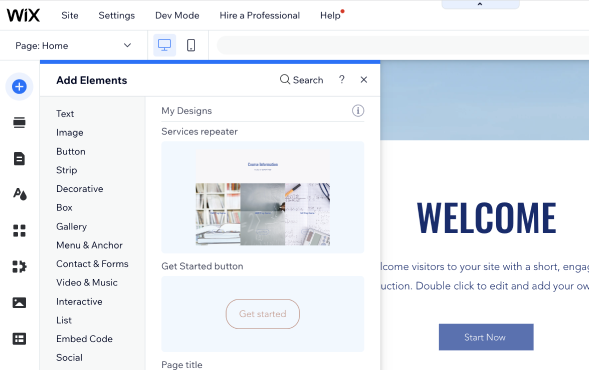
Wix screenshot of the add elements page
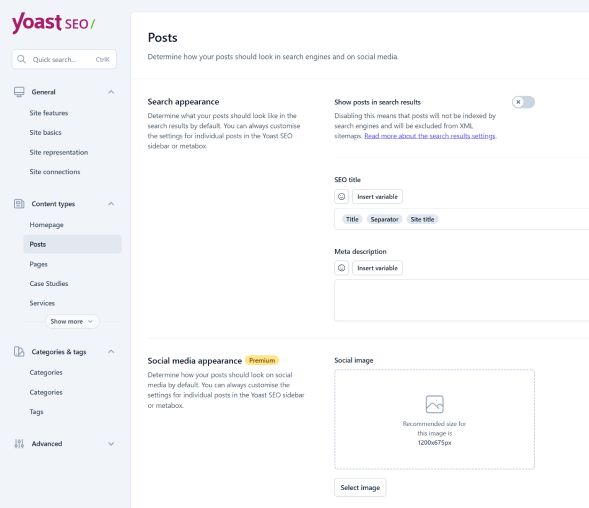
Yoast showing hiding posts on search Results

WordPress gives you genuine control over your website

WordPress is different. It’s open source, which means no one owns it — and no one can take it away from you. Your site lives on your own hosting, your files are yours, and you can take them anywhere.

More importantly, WordPress is endlessly flexible. It powers around 43% of all websites on the internet — from small local businesses to major news outlets — because it can genuinely do almost anything. With the right developer and the right setup, your site can grow alongside your business rather than holding it back.

That said, WordPress does have a steeper learning curve than Wix. It’s more powerful, but it works best when it’s set up properly by someone who knows what they’re doing. A poorly built WordPress site can be just as frustrating as a limited website builder — which is why the quality of the build really matters.

So why does having a developer make such a difference?

This is the part that gets overlooked. The platform is only part of the story — what you build on it matters just as much.

When we build a WordPress site at Blueprint Web, we’re not just installing a theme and handing it over. We design it in Figma first, build it with clean custom code using ACF, make sure it loads fast, works perfectly on mobile, and is set up so you can actually manage your own content without needing us every time you want to change a sentence.

That’s a very different experience from a templated Wix site — even if both technically have a homepage and a contact form.

The other thing a developer brings is longevity. We handle the hosting, the updates and security, the backups. If something breaks at 9pm on a Friday, you’ve got someone to call. With a DIY website builder, you’re on your own.


Overall

WordPress vs Wix vs Squarespace isn’t really a fair fight for most growing businesses. Website builders have their place, but if you’re serious about your online presence — and want a site that can actually do the job — WordPress, built properly, is the better long-term investment.

Not sure which route is right for you? We’re always happy to have an honest chat about what would actually suit your business. No pressure, just good advice. Get in touch with Blueprint Web.

Read More